20/05/2026
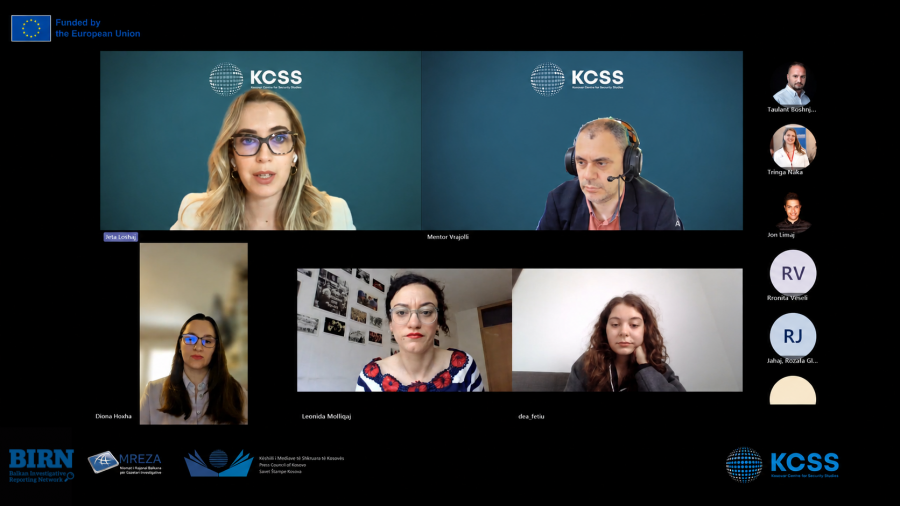
On May 15, the Kosovo Center for Security Studies (KCSS) organized a webinar as part of the project “Strengthening the Role and Capacities of Investigative Journalism in Kosovo,” which focuses on preventing and increasing resilience to anti-gender ideologies and right-wing extremism in Kosovo. The event discussed the findings of the report “The Rise of Anti-Gender Narratives in Kosovo: Far-Right Ideologies, Digital Violence, and Threats to Women’s Rights.”
The panel featured activists and experts who addressed the impact of anti-gender narratives in Kosovar society, forms of digital violence against women, and the challenges that continue to undermine gender equality and democratic space. Panelists in this discussion were Miranda Molliqaj from QIKA.org, Diona Hoxha from Friedrich Ebert Stiftung (FES), and Dea Fetiu, an activist, while the discussion was moderated by Jeta Loshaj, a researcher at KCSS.
During the webinar, it was emphasized that anti-gender ideologies in Kosovo continue to be present and are often linked to nationalism, patriarchal structures, and a lack of a genuine institutional response. However, participants emphasized that opposing reactions to advances in women's rights and the LGBTIQ+ community show that there is progress and gradual change in society, which often also produces conservative counter-responses.
The discussion also addressed the importance of intersectionality, emphasizing that discrimination does not only affect women in politics or public life, but also other marginalized groups in society. The panelists discussed the reasons why anti-gender narratives are becoming more visible in Kosovo, highlighting that debates on feminism and gender equality are about social justice in general, without discrimination against any gender or community.
In conclusion, it was emphasized that women in Kosovo continue to demonstrate resilience and continuous civic engagement, drawing on a long history of activism dating back to the period of the former Yugoslavia. The webinar served as a space for reflection and discussion on the need for a more coordinated institutional and societal response to anti-gender narratives and right-wing extremism in Kosovo.
Webinar link is available here:
This activity is funded by the European Union. Its content is the sole responsibility of KCSS and does not necessarily reflect the views of the European Union or BIRN.