10/03/2026
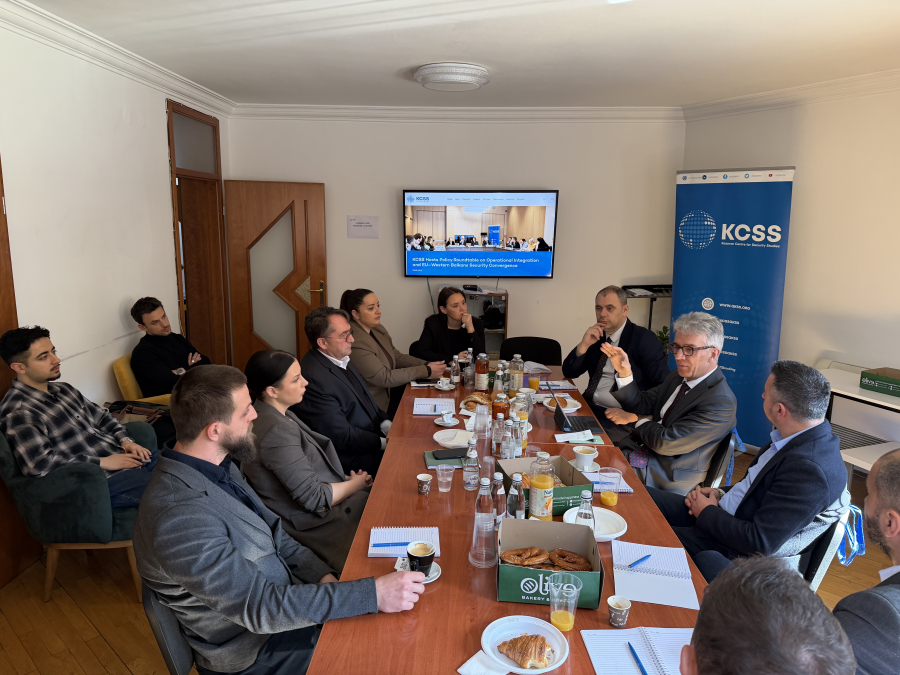
On Tuesday, March 10, 2026, KCSS hosted a debriefing session on discussions held during the Munich Security Conference (MSC), which took place on February 13–14 in Munich, Germany. The Ambassador of the Federal Republic of Germany to Kosovo, H.E. Rainer Rudolph, who attended this year’s MSC, joined the meeting and shared reflections on some of the key dynamics that emerged during the two-day conference, including insights that carry relevance for the Western Balkans. Representatives of civil society organizations in Kosovo used the opportunity to learn more about the discussions at the MSC and to exchange views on current political developments in the country. The meeting was held under the Chatham House Rule.
Although the Western Balkans was not a central focus of the conference – given the broader emphasis on the theme of the “under destruction” of the international rules-based order – several elements nonetheless offered important takeaways for the region. As discussions continued regarding the evolving nature of the transatlantic partnership, participants noted that the current momentum could also serve as an important signal for the European Union to advance the merit-based integration of the six Western Balkan countries. At the same time, it was emphasized that this momentum should be reciprocal and supported by continued efforts from the Western Balkans themselves. Some participants also noted that persistent ambiguity surrounding the enlargement process has affected the overall atmosphere, underscoring the need to approach enlargement not only as a foreign policy matter but also as an issue closely linked to European security.
In the context of Kosovo, political stability was highlighted as an important factor shaping the country’s ability to effectively absorb and implement existing initiatives and agreements, including the Growth Plan. In this regard, participants stressed the importance of acknowledging and making full use of the available funding mechanisms and opportunities.
Finally, attention was also given to the Kosovo–Serbia Dialogue, which remains important not only for advancing reconciliation and normalization of relations but also for demonstrating political maturity in a context marked by both domestic and broader regional and global polarization. The anticipated entry into force of the law on foreigners and vehicles later this month was also discussed, particularly in terms of its potential implications for the daily lives of Kosovo Serbs and for the broader Brussels-led process of normalization. On the domestic front, participants also reflected on the uncertainties surrounding the institutional developments related to the election of the President, noting that the current situation raises questions about whether the country may once again face an institutional impasse and what implications this might carry.