5/03/2026
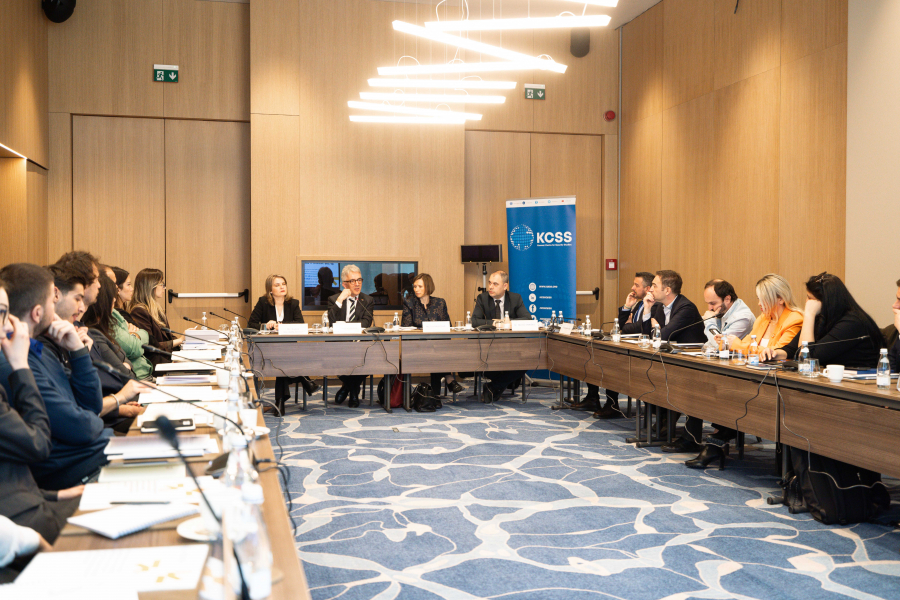
Prishtina, 4 March 2026: The Kosovar Centre for Security Studies (KCSS) hosted a policy roundtable today in Prishtina to discuss how Kosovo and the Western Balkans can strengthen practical cooperation with European Union institutions in the fields of security, rule of law, and cybersecurity.
The event brought together representatives of public institutions, diplomats, civil society experts, and policy practitioners to discuss the concept of “operational integration” and its potential to advance the region’s gradual integration into EU systems and agencies. The discussion was organized in the framework of the #IGNITA initiative and the GAINS project supported by the Open Society Foundations – Western Balkans.
Opening the event, KCSS Executive Director Mentor Vrajolli welcomed participants and emphasized the importance of strengthening cooperation between the Western Balkans and European partners in addressing shared security challenges.
Presenting the Operational Integration Agenda, KCSS Head of Research Dr Ramadan Ilazi highlighted the need for a more pragmatic approach to EU integration. He noted that operational integration allows institutions from the Western Balkans to participate in EU operational routines and cooperation mechanisms even before full membership. He noted that operational integration could include observer participation in EU agencies, working arrangements with bodies such as ENISA, Eurojust and EPPO, structured information-sharing, and participation in EU training and coordination mechanisms. “The idea is simple,” Ilazi said. “Western Balkan institutions can gradually become part of EU operational systems through practical cooperation on areas o mutual interest and benefit, like cybersecurity, FDI screening, and disinformation. This strengthens institutional capacity in the region while also helping the EU address shared security risks. In that sense, operational integration is mutually beneficial for both the Western Balkans and the European Union.” “Operational integration offers a practical way to strengthen cooperation between the EU and the Western Balkans in areas such as cybersecurity, rule of law monitoring, investment security and countering foreign interference,” Ilazi said.
The agenda, developed by KCSS researchers, outlines several areas where deeper cooperation could be pursued, including collaboration with EU agencies such as ENISA, Eurojust, EPPO and the EU Fundamental Rights Agency.
Speaking at the roundtable, H.E. Rainer Rudolph, Ambassador of Germany to Kosovo, emphasized the importance of practical cooperation between institutions, particularly in areas such as law enforcement cooperation and combating organized crime. He noted that strengthening institutional links between the EU and the Western Balkans contributes to stability and security across the region. Ambassador Rudolph also highlighted Germany’s continued support for closer cooperation between the European Union and the Western Balkans. He noted the central relevance of the rule of law and the fight of corruption as central for building the case in the European integration process for the region. Furthermore, he stated that Germany has been actively supporting reforms and regional cooperation, including through initiatives such as the Berlin Process. Ambassador Rudolph welcomed discussions on advancing operational cooperation with EU, stressing that as the discussions on the progress of Albania and Montenegro are ongoing, we should not leave the four remaining countries behind, and strengthening security and trust across the region is paramount.
Eva Palatova, Deputy Head of the EU Office in Kosovo, commended KCSS on their research and advocacy efforts, underlining that ideas for gradual or phased integration of Western Balkans partners fit well with current considerations on how to deliver on the new momentum in Enlargement within the EU. Ms. Palatova highlighted several EU tools and frameworks that can support closer cooperation with the region. She noted that technical cooperation with EU agencies, as well as initiatives under the Reform and Growth Plan such as SEPA integration and Digital Single Market integration, offer concrete opportunities to strengthen institutional capacities. Ms. Palatova, expressed support, in principle, for the idea of strengthening practical cooperation between the Western Balkans and EU institutions. She noted that there are already a number of EU instruments and mechanisms that can support deeper engagement in areas such as cybersecurity, justice cooperation and economic integration. Palatova said initiatives that encourage closer operational links with EU agencies can help strengthen institutions in the region while bringing concrete benefits both for the Western Balkans and the European Union.
Rudina Nallbani Hoxha, Programme Manager at the Friedrich-Ebert-Stiftung, emphasized the importance of institutional capacity and public administration reforms in enabling countries of the region to effectively engage with EU mechanisms. She noted that initiatives such as the EU Growth Plan provide opportunities to advance reforms but require sustained commitment and effective implementation.
The discussion was moderated by Jeta Loshaj, researcher at KCSS, who guided the conversation on practical steps that could support stronger institutional cooperation between the Western Balkans and the EU.
Western Balkans should continue advancing reforms and make full use of opportunities created by the EU’s Growth Plan and the Reform and Growth Facility. The EU is already investing significantly in strengthening institutions and economic convergence in the region, and that initiatives such as operational integration can help translate these investments into concrete cooperation. EU Cybersecurity Reserve, is already at Kosovo’s disposal to provide support if required.
Participants highlighted the need to maintain momentum in regional cooperation and to identify concrete entry points that can allow Western Balkan institutions to engage more systematically with EU security and governance frameworks.