27/05/2025
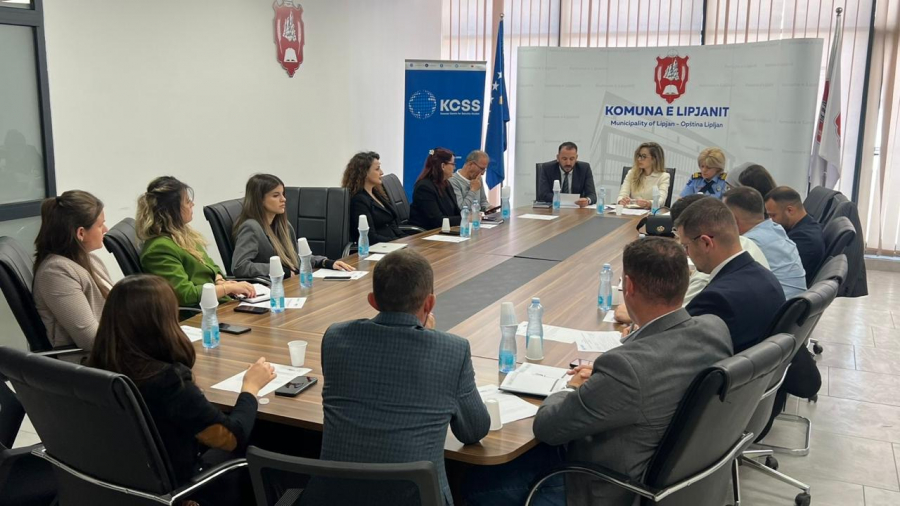
Lipjan, 26 May 2025: The Kosovar Centre for Security Studies (KCSS) hosted a community roundtable in the Municipality of Lipjan on interethnic coexistence, as part of an initiative supported by the National Endowment for Democracy (NED). The roundtable discussion included participants from municipal officials, civil society organisations, community representatives, students, and law enforcement in which they explored the current state of interethnic relations in Lipjan. The roundtable forms part of KCSS’s wider efforts to promote inclusive dialogue and democratic resilience at the local level. Throughout the exchange in dialogue, participants looked into not only the challenges but also the examples of collaboration and trust-building that have defined Lipjan’s interethnic landscape in recent years.
Participants highlighted Lipjan as a good example of a municipality where interethnic harmony is not only present but deeply embedded in community life, contrasting with the polarisation often depicted in high level politics and the media. Avni Jashari, Chief of Cabinet for the Mayor, opened up the conversation by discussing measures taken to maintain this harmony, including the establishment of structures specifically dedicated to community outreach. Representatives from villages, such as Hallaç i Vogël, including an NGO representative, recounted experiences of equal treatment and inclusion, even in the immediate post-war state. A representative for the Serbian community, Zoran Stanojevic, described Lipjan as a place where open dialogue and cooperation are alive and functioning, with occasional, isolated incidents. A Kosovo Police representative, Xhevahire Salihu added weight to this, emphasising strong lines of contact with all communities and the existence of dedicated units to manage community issues. She noted that she personally keeps the contact details of community members on her phone to provide support, which illustrates the trust-based approach taken by local institutions.
Civil society actors also shared their experiences working closely with international partners such as Civikos, FIQ, CDF, and Women for Women. Projects like Advancing Together VORAE, aimed at empowering Roma, Ashkali, and Egyptian communities, were highlighted as key pillars of local engagement. A speaker from the Office for Free Legal Assistance reported a 33% increase in non-majority citizens seeking support, reflecting the growing trust in public institutions. Hyra Bytyqi, a spokesperson in the Municipality and Head of the Women Division, shared her work on initiatives with correctional centres, including mental health and anti-bullying campaigns, programmes that have drawn participation from Serbian community members as well. Furthermore, religious coexistence and shared participation in educational lectures at these centres were seen as important examples of mutual respect. The police representative shared the story of an elderly woman who initially declined social assistance due to a lack of Kosovan documentation. Through the intervention of the Office for Communities, she eventually accepted Kosovo citizenship and now receives state support.
Disinformation was identified as a growing challenge that threatens these local successes, leading participants to recommend increased investment in education and grassroots integration efforts. Particular concerns were raised over high dropout rates in areas like Janjeva, with calls urging for better coordination to ensure that children remain in school at least until ninth grade, as legally required, where support from the Ministry of Education is needed as well. Participants also stressed the need for more youth-focused activities, such as movie nights that have proven to be effective in building interethnic dialogue and called for continued support to empower women. In closing, the roundtable reaffirmed Lipjan as a model of coexistence in Kosovo and urged institutions and donors alike to invest in sustaining this success through deeper integration and community outreach.
This roundtable, supported by the National Endowment for Democracy (NED), was an opportunity to spotlight the positive examples for interethnic coexistence in Lipjan and to exchange perspectives on maintaining and strengthening community cohesion. It offered valuable insight into both the local mechanisms that have fostered trust and the broader structural challenges, such as disinformation and educational disparity, that still require attention.