17/09/2025
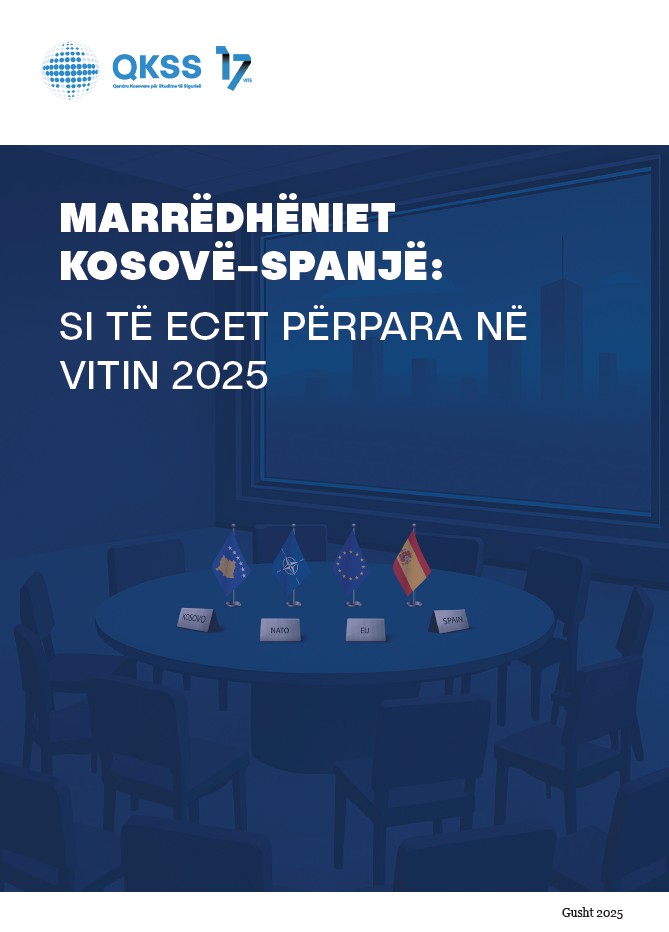
On September 17, 2025, the Kosovar Centre for Security Studies (KCSS) released its latest paper, “Kosovo–Spain Relations: How to Move on in 2025”, presenting a roadmap for constructive engagement between Kosovo and Spain that recognises shared European values while addressing longstanding political sensitivities.
The publication highlights that Kosovo represents a fundamentally distinct case from Catalonia and the Basque Country, the two secessionist movements in Spain that are influencing Madrid’s rigid stance on international law, Euro-Atlantic integration, and its domestic view that sees Kosovo as a precedent-setting example for such movements. These arguments are rooted in the sui generis case that the International Court of Justice and the European Union have both affirmed, setting Kosovo apart from separatist movements elsewhere and providing Spain with the opportunity to engage pragmatically without compromising its domestic position.
The key recommendations and conclusions from the study include:
A central innovation in the report is its call to shift the gravity of the discussion towards Madrid’s central government and policymaking institutions, rather than viewing Kosovo solely through the prism of Catalonia or the Basque Country. This forward-looking framing seeks to build bridges on the basis of shared European commitments, international law, and mutual interests in security, prosperity, and regional stability.
“While full recognition may not be imminent, the path to constructive engagement is open today,” the publication concludes. “By engaging Spain’s institutions pragmatically and respectfully, Kosovo can help make it increasingly difficult to say ‘no’ to cooperation.”
This approach envisions a new chapter in Spanish–Kosovar relations that steadily normalises engagement, strengthens people-to-people ties, and clears the way for deeper alignment within Europe’s political and security frameworks.