“China Is in Our Neighbourhood” - KCSS Hosts Roundtable Discussion on China’s Foreign Policy Approach Towards Kosovo

9/07/2025

“Kina është në fqinjësinë tonë” - QKSS organizoi tryezë diskutimi mbi qasjen e politikës së jashtme të Kinës ndaj Kosovës

Prishtina, 08 July 2025 

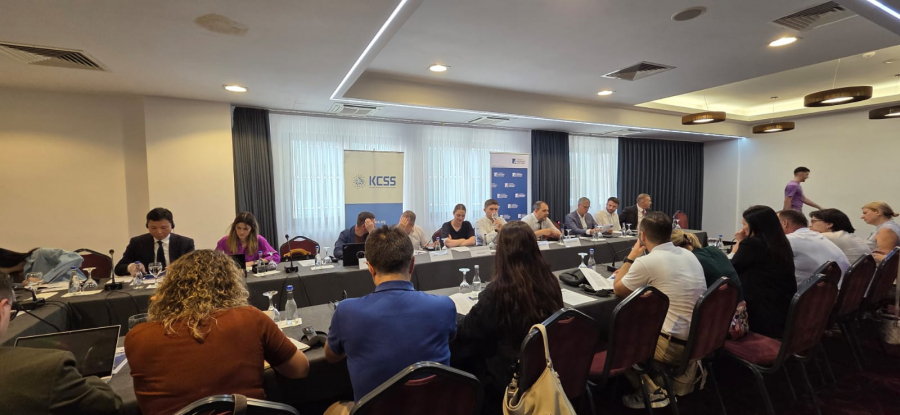
The Kosovar Centre for Security Studies (KCSS), with the support of the Konrad Adenauer Stiftung (KAS), organized a high-level expert roundtable to discuss its latest research findings on China’s view on the normalization and dialogue of Kosovo and the Western Balkans.

The event brought together 29 participants, including civil society actors, security experts, ambassadors, and researchers, engaging in a multi-faceted Chatham House-style discussion on the narratives driving China’s foreign policy approach in the Western Balkans. The roundtable spotlighted several findings from KCSS’s recent publication “How Does China View the Western Balkans, Kosovo and the Normalization Dialogue?”.

  • Alignment with Serbia: China’s foreign policy discourse consistently echoes and supports Serbia’s stance on Kosovo. Despite rhetorical claims of neutrality and multilateralism, China has repeatedly reaffirmed Serbia’s position. Further, China’s economic, diplomatic, and military partnerships with Serbia are considered to form the backbone of its regional presence in the Western Balkans.
  • Testing Ground for Strategic Narratives: The Western Balkans serve as a discursive laboratory with China testing narratives of multipolarity, state sovereignty, and anti-Western sentiment. In this context, Kosovo symbolically serves as a means to to critique liberal internationalism.
  • Undermining the Normalization Dialogue: While China superficially supports the dialogue between Kosovo and Serbia, it undermines EU-led processes by avoiding endorsement of significant milestones, such as the 2023 Agreement on the Path to Normalization. Beijing’s preference to route discussions through the UN serves as a an attempt to stall resolution and maintain ambiguity.
  • Instrumentalization of International Law: China’s invocation of UN Resolution 1244 selectively omits reference to the 2010 International Court of Justice (ICJ) opinion, which affirms the legality of Kosovo’s declaration of independence. According to the authors, this legal framing is politically opportunistic and aims to shield China from its concerns, such as those related to Taiwan.

Behind this backdrop, the speakers critically outlined China’s influence-taking in the region, which was described as neither passive nor neutral. Instead, participants described Beijing’s involvement in the region as deliberate, strategic, and increasingly aligned with Serbia’s political objectives. In addition, the discussion touched on topics of heightened relevance, including the growing implementation of Chinese technology and platforms, related privacy concerns, and motives of discourse manipulation, elite capture, and selective economic dependencies. Participants agreed that this evolving dynamic poses a challenge for Kosovo, the EU, and NATO, all of whom must develop a more coherent awareness and policy posture towards China’s expanding footprint.