13/05/2026
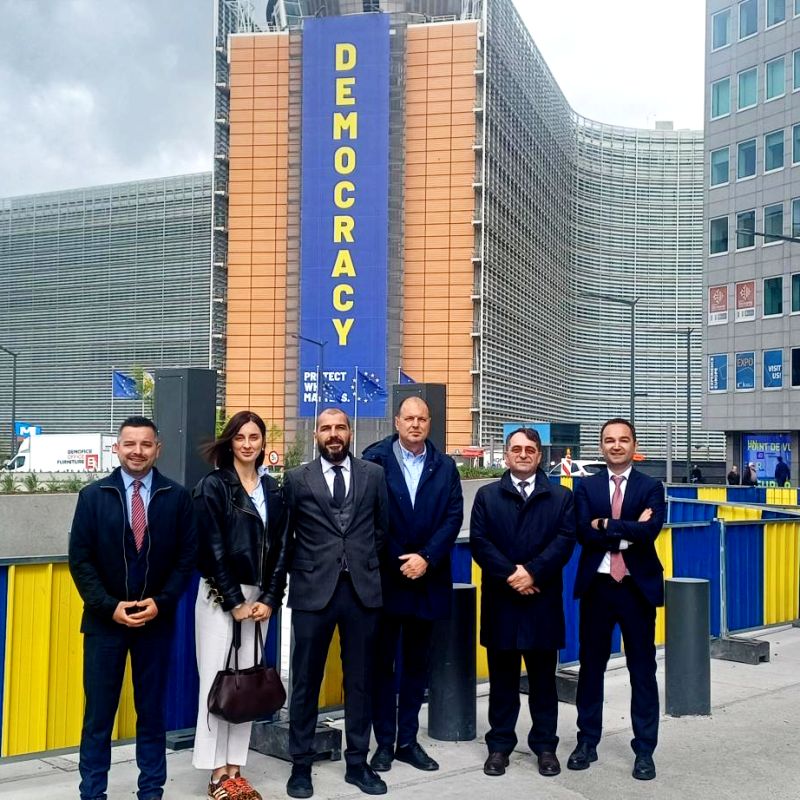
Brussels, May 12-13, 2026: A joint delegation of civil society representatives from Kosovo and Serbia is in Brussels this week for meetings with European Union institutions, focusing on the normalization dialogue and the enlargement process.
The visit brings together representatives from several organisations, who are engaging with officials from the European External Action Service, the European Commission, and EU Member States.
The meetings build on a workshop held in Durrës in March, where participants developed a set of joint proposals and submitted a letter to the EU Special Representative for the Kosovo–Serbia Dialogue and to the European Commissioner for Enlargement. Those proposals are now being presented and discussed directly with EU interlocutors.
Participants describe the timing of the visit as significant. While the dialogue between Kosovo and Serbia has produced a number of commitments in recent years, concerns remain about limited progress in implementation. There is a perceived need to move from a reactive, crisis-driven approach towards a more structured and predictable implementation phase.
During the meetings in Brussels, the delegation is outlining several areas for potential EU engagement. These include introducing a more sequenced and accountable approach to implementing existing agreements, strengthening the societal dimension of the dialogue through structured engagement with civil society, and advancing credible enlargement incentives, including Kosovo’s progress towards EU candidate status.
An additional element of the discussions focused on policy proposals from the IGNITA initiative supported by Open Society Foundations – Western Balkans (OSF-WB). In this context, Ramadan Ilazi presented work on operational integration as a potential package of incentives for Kosovo and the wider region, aimed at generating renewed momentum for reforms, strengthening regional cooperation, and advancing the normalization of relations.
Another focus is the role of civil society itself. Representatives note that organisations in both Kosovo and Serbia have continued to cooperate across communities, promoting dialogue and trust even during periods of political tension. They argue that this ongoing engagement could be more systematically incorporated into the EU-facilitated process.
The visit has been supported by the Robert Bosch Stiftung, and the European Institute of Peace has facilitated the visit and arranged the meetings with EU stakeholders.