30/09/2025
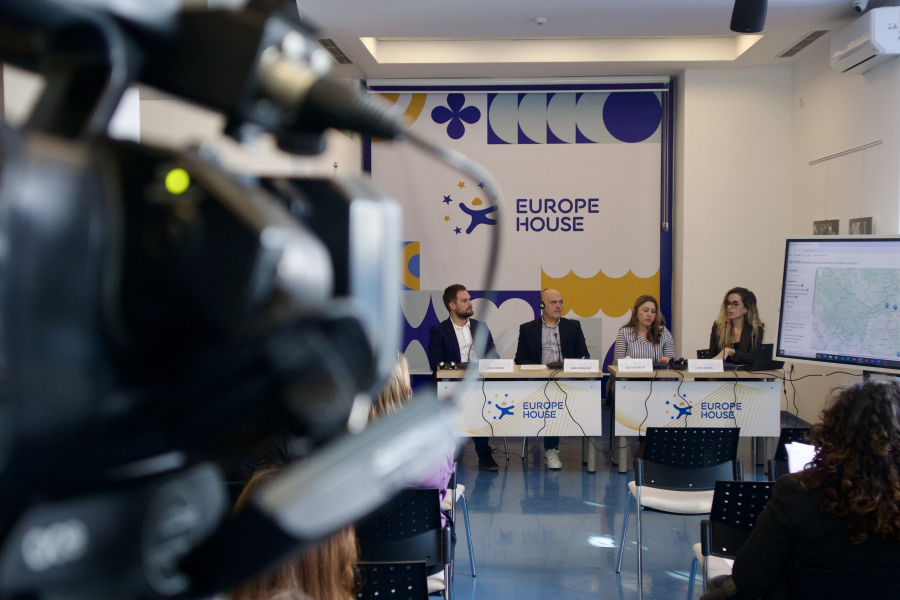
The Kosovar Centre for Security Studies (KCSS) hosted a public media event and panel discussion on media relations on interethnic relations in Kosovo, marking the final step of the project “Increasing Government Transparency and Accountability in Interethnic Dialogue”, supported by the National Endowment for Democracy (NED).
The discussion was moderated by Jeta Loshaj, Researcher and Project Associate at KCSS. After presenting two of the project's central outputs (a policy memo on interethnic communication at the local level and an online risk monitoring platform for interethnic relations). The panelists were Zulfija Jakupi (Radio Kosova 2), Isak Vorgucic (Radio Kim), and Uran Haxha (Kosovo 2.0). Jakupi started by mapping how Kosovar outlets typically frame interethnic events. She described the ambition of outlets such as Radio Kosova 2 to uphold a professional and impartial standard, considering both Albanian and Serbian perspectives, as well as third party views. However, she emphasized that this is not always industry standard. She expanded on recurring patterns and narratives she recognises in daily reporting, noting common differences between Albanian and Serbian reporting in Kosovo, with each seemingly reporting for their “own party”. The perpetuation of different narratives in each language is described as hindering dialogue and fueling hostility. When asked about notable differences in the reporting on interethnic events between Albanian-language and Serbian-language outlets, she noted that Serbian language media in Kosovo at times features the perspectives of Belgrade officials over the perspectives of Serbian speaking Kosovar citizens. Further, she highlighted the lack of community and minority perspectives in current reporting on interethnic events, noting that this omission contributes to communities feeling excluded and undermines their agency in the conversation. Lastly, she pointed out an observed lack of reporting on the ordinary that concerns Kosovars of all origins, stating that there is more to report on than just ethnicity and politics in Kosovo.
Next, Isak Vorgučić, director of Radio Kim, explored the responsibilities journalists have in either calming tensions or unintentionally fueling through their coverage of interethnic events. Following Jakupi’s reasoning, he first pointed out that all journalists have the responsibility to uphold a professional standard of reporting, investigating all relevant perspectives and finding a balance. He explained that selecting information to fit a certain narrative not only undermines journalistic integrity, but cheats the audience of a realistic understanding of the events, making reconciliation between parties difficult. Vorgučić further commented that there are two different types of Serbian media outlets in Kosovo. Those under Belgrade influence and those reporting independently. He stressed the importance of international donors that recognise the value of minority media reporting in combating interethnic tensions.
Lastly, Uran Haxha, journalist at Kosovo 2.0, was asked how political pressures or ownership structures in the media landscape shape reporting on interethnic relations. He stated that the influence of politics on media is evident through Serbian financing of Serbian language reporting in Kosovo and across borders. Arguably, this financial backing helps perpetuate some narratives over others, leading to observable influence on Serbian communities. Further, Haxha pointed out that there are many issues of interest for Serbian and Albanian communities in Kosovo alike, naming the pollution of the Gračanica river as an example. However, he noted that such opportunities for dialogue and reconciliation are often overlooked, as media instead focus on inward-looking, single-community issues rather than shared challenges. Further, he explored generational differences in the industry, pondering whether young journalists approach covering interethnic events and relations differently compared to the older generation.
With the conclusion of the panel discussion, the floor was opened to questions from the audience. Two issues were raised in the discussion with the public. First, while relations between Serbs and Albanians in Kosovo often take center stage, it is equally important to include discussions about other minority groups, such as Turks, Roma, Ashkali and Egyptian communities to foster broader dialogue. Further, education was marked as a central factor in shaping future dialogue on interethnic relations in Kosovo.
In her closing remarks the panelists highlighted how media, civil society, institutions, and the wider community can work together to foster more balanced coverage and contribute to building trust across communities, Jakupi noted that it is vital to focus avoiding purely negative reporting on interethnic issues, highlighting the importance of positive stories on interethnic relations in fostering cooperation and unity. Furthermore, she urged greater coverage of daily life (topics that resonate with Kosovars of all origins) rather than focusing solely on politics.
Vorgučić calls for stronger efforts to integrate ethnic Serbs, noting that while newcomers from abroad are typically offered opportunities for inclusion, long-standing Serb residents of Kosovo should likewise be more fully incorporated into broader Kosovar society. He further extended this appeal to Serbian-language media, emphasizing that independent Kosovar outlets publishing in Serbian should be recognized as Kosovar rather than mistaken for Belgrade-controlled outlets.
Finally, Haxha concluded that the principles of media ethics, if adhered to by all parties, should help foster a more balanced media coverage of events. He further pointed to disinformation as undermining trust among communities and points toward media education and the promotion of media literacy among the population as a key remedy.
In conclusion, the event underscored that responsible and balanced media reporting is vital for strengthening interethnic trust and cooperation in Kosovo. Panelists emphasized that while current media practices often reproduce divided narratives, greater inclusion of community voices, more attention to everyday shared challenges, and a commitment to professional standards of journalism can help shift this dynamic. KCSS will continue to contribute to advancing this agenda, particularly through the development of its online IMAP platform, which provides impartial, real-time monitoring of risks and opportunities in interethnic relations. By offering a single, accessible space for verified information, IMAP helps prevent the spread of disinformation and promotes positive initiatives across communities.