23/03/2026
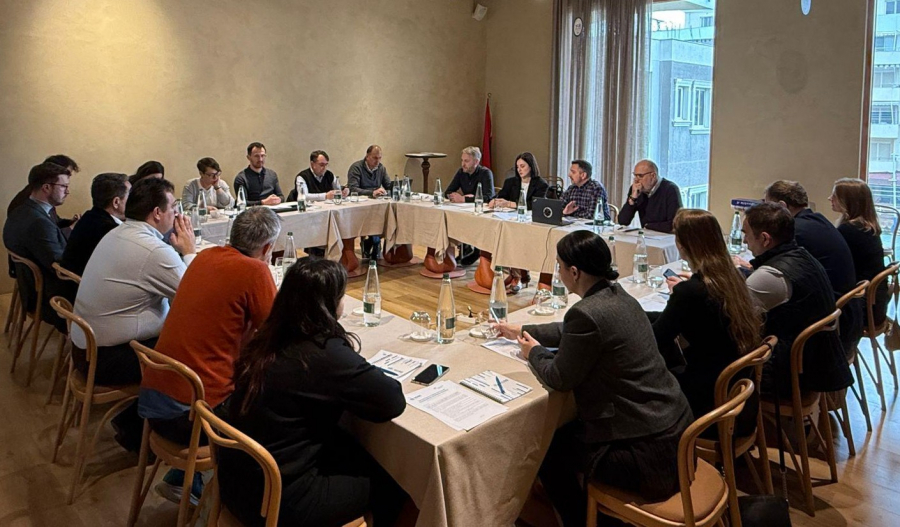
March 18-20, 2026: A year after the first meeting in March of 2025, on March 19, in Durrës, Albania, KCSS hosted the Second Kosovo–Serbia Civil Society Peacebuilding Consultation Workshop, bringing together leading civil society actors, researchers, and partners from both Kosovo and Serbia. The workshop is part of the Kosovo Interethnic Dialogue and Integration Initiative (KINDI), supported by the Robert Bosch Stiftung.
Over two days, participants reflected on the state of Kosovo–Serbia relations, the challenges of 2025, and the shrinking space for civil society engagement.
Despite an increasingly difficult environment, the workshop highlighted a shared determination to keep the reconciliation efforts and dialogue alive, strengthen cooperation, and explore new ways to reconnect with communities on the ground. As noted during the discussions: “In a context where political dialogue is stagnating, civil society has a responsibility to protect the remaining space for communication, reduce fear, and keep people connected. Even small steps matter.”
The group also discussed concrete ideas for 2026, including deeper engagement with EEAS, EU Member States, community‑level activities, and a more coordinated regional civil society voice. A key part of the workshop was a collective reflection on the EU’s formal response to the joint civil society letter sent in April 2025. Participants welcomed the acknowledgment of civil society’s role, while also noting the need for more structured, consistent engagement with EU institutions.
Participants agreed to prepare two new joint letters — one on the normalization process and one on EU enlargement — to be shared with the EEAS and DG ENEST, building on the commitments expressed in last year’s coordinated message
Speaking after the workshop, Ramadan Ilazi, head of research at KCSS said the discussions reflected a growing sense of urgency: “The space for meaningful civil society engagement is shrinking, but the need for it has never been greater. At a time when mistrust is rising and fear is creeping back into communities, keeping dialogue alive is itself an act of peacebuilding.”
Participants described the political landscape of 2025 as one marked by stagnation, crisis management, and declining transparency in the normalization dialogue. While the EU remains central to the normalization process, participants argued that Brussels has become “too focused on managing crises and delivering quick wins,” rather than ensuring sustained progress or supporting community‑level initiatives. Participants also discussed sending delegations to Brussels, holding community‑level activities in North Mitrovica and the Presheva Valley, and improving coordination across peacebuilding networks.
The workshop concluded with a shared commitment to continue cooperation, strengthen regional networks, and protect the space for dialogue and interethnic engagement at a moment when it is increasingly under pressure.