29/07/2025
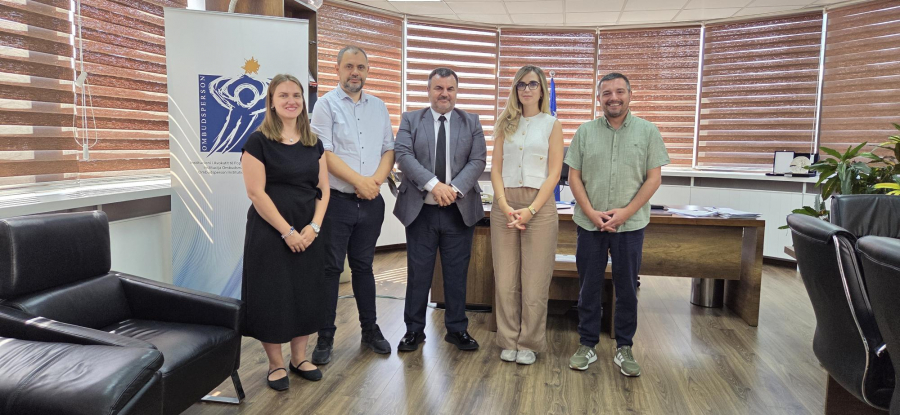
Prishtina, July 24, 2025 – The Kosovar Centre for Security Studies (KCSS) team met with Mr. Naim Qelaj, the Ombudsperson of the Republic of Kosovo, to discuss opportunities for deepening cooperation and promoting interethnic dialogue in Kosovo.
The meeting centered on the ongoing KCSS project "Increasing Government Transparency and Accountability in Interethnic Dialogue," supported by the National Endowment for Democracy (NED). The KCSS team briefed Mr. Qelaj on the project's activities and shared findings from the implementation process.
The project aims to foster communication and mutual understanding between Kosovo’s diverse communities, with a particular focus on interethnic dialogue. So far, it has produced a wide range of activities, including community roundtables in six municipalities, the dissemination of infographics, and the publication of assessment reports and analytical studies.
KCSS expressed concern over the lack of meaningful engagement and dialogue between communities in Kosovo while also recognizing the important role that the Ombudsperson Institution has played in promoting inter-community dialogue. Kosovo’s current political climate is marked by polarization, which can have a detrimental effect on interethnic cooperation and communication. Projects like the one KCSS is implementing with the support of NED are hence essential to maintaining open and continuous dialogue and preventing political polarization from spilling over into interethnic relations at the community level.
KCSS commended Mr. Qelaj for his proactive role in raising community concerns, including through his visits to northern Kosovo. The organization emphasized the importance of these efforts and expressed readiness to support the work of the Ombudsperson Institution and contribute to added value to dialogue between communities and decision-makers.
The KCSS team also shared findings and concerns from its activities with the Ombudsperson Institution, highlighting ongoing issues such as discrimination within and between communities, challenges related to daily life and social wellbeing, and the persistently difficult situation in the north of Kosovo, which has been further complicated by the 2022 institutional boycott. Other critical concerns raised included language rights, property rights, access to civil registration and documentation, and the ethnicization of social problems. In addition, KCSS identified local variations in issues such as environmental management, collective housing, and healthcare availability.
An important challenge identified during the discussion was the lack of local-level capacities to effectively engage with institutional processes and ensure adequate representation of community rights and concerns in decision-making.
Both sides agreed to explore concrete avenues for cooperation, particularly through the promotion of internal dialogue, institutional consultations with communities, and the joint communication of community concerns to decision-makers.
KCSS expressed its gratitude to the Ombudsperson Institution for its support and willingness to collaborate.