23/09/2025
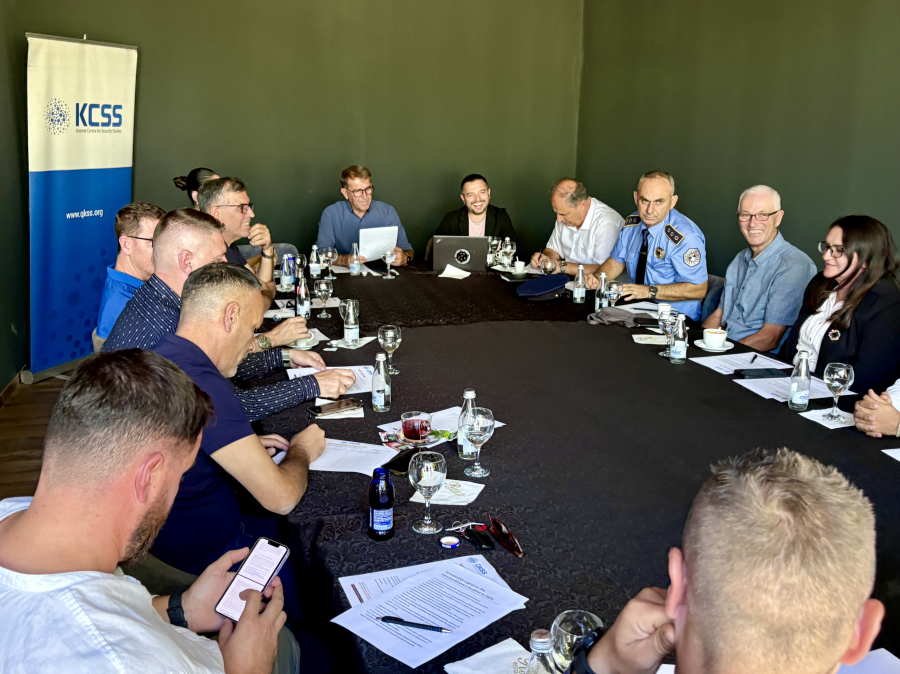
Viti, 22 September 2025 – The Kosovar Centre for Security Studies (KCSS) organized a roundtable in Viti bringing together local officials, civil society representatives, educators, youth leaders, and media actors to discuss the impact of disinformation on interethnic relations.
During the roundtable, KCSS presented the findings of its recent report How Disinformation Fuels Ethno-Political Radicalization in Kosovo, authored by Gentiana Paçarizi, Dr. Ramadan Ilazi, and Pia-Katharina Pallasch, and with contributions from Denora Gashi.
Participants emphasized that media outlets often rely on unverified sources and lack transparency in both finances and editorial standards, which contributes to the spread of disinformation. The closure of local media outlets and the absence of correspondents were also identified as key vulnerabilities, leaving citizens dependent on centralized or foreign-based information sources.
Despite these challenges, the discussion highlighted Viti’s tradition of multiethnic harmony and strong institutional responsiveness as important resilience factors. Mayor Sokol Haliti pledged that the municipality will take proactive measures to counter disinformation and support interethnic cooperation.
Dr. Ramadan Ilazi, Head of Research at KCSS, said: “Disinformation undermines trust between communities, but local resilience and strong institutional responses, such as those seen in Viti, show that it is possible to limit its impact. Community-level engagement is essential to building long-term resilience.”
The event was held as part of the DISRUPT project – Disinformation, Radicalisation and Unpacking Political Tensions in Kosovo.