8/05/2026
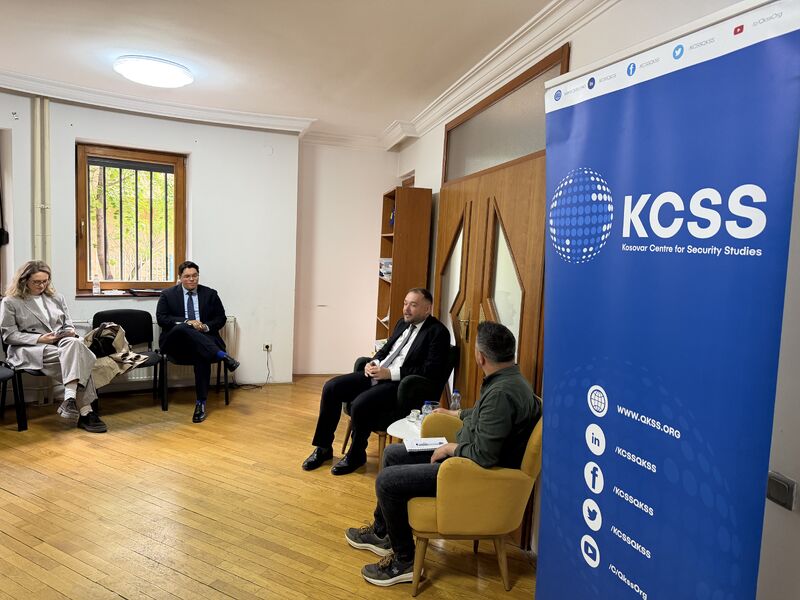
Prishtina, 7 May 2026: In the framework of the KINDI – Kosovo Interethnic Dialogue and Integration Initiative, the Kosovar Center for Security Studies (KCSS) organized a civil society roundtable discussion on the implications of Ireland's upcoming 2026 Presidency of the Council of the European Union for Kosovo and the wider Western Balkans region.
The discussion opened with reflections on Ireland's growing engagement in the Western Balkans and the renewed momentum around EU enlargement as a strategic priority. Participants noted the importance of having an enlargement-minded presidency. Concerns were also raised about the increasing challenge that foreign malign influence poses to regional stability and democratic resilience across the Western Balkans. Concerns were also expressed about EU's tendency to centralise bilateral disputes within the enlargement process as they risk undermining reform momentum in candidate countries. Kosovo's consistently strong pro-European public sentiment was noted as a significant asset in this context. Furthermore, participants agreed that Kosovo deserves to be granted candidate status and the EU should deliver on this.
A substantial portion of the discussion focused on the Kosovo–Serbia normalisation dialogue and interethnic relations in the country. The Good Friday Agreement was examined as a potential reference model, with participants underscoring that its success rested on sustained political will from all parties over a prolonged period. The possible establishment of a dedicated EU peacebuilding fund for the Western Balkans, drawing on mechanisms developed in the Northern Ireland context, was raised as an option worth exploring. The growing influence of women's groups, civil society mobilisation, and information campaigns — both domestic and externally driven — in shaping public perceptions of the normalisation process was also highlighted. Participants further noted the importance of careful sequencing within the dialogue process and suggested that early engagement with Greece, as a future EU Presidency holder, would be strategically valuable.
At the conclusion of the meeting, participants agreed to collect inputs from civil society as suggestions for the Irish Presidency of the Council of the European Union, vis-à-vis normalization dialogue.